


Introduction
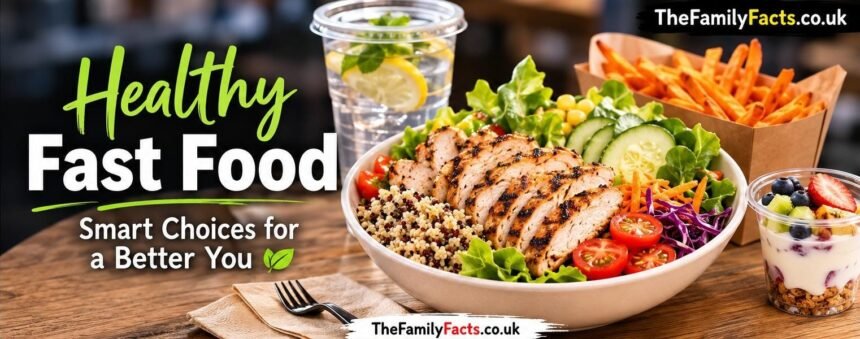
Eating well does not always mean cooking every meal from scratch. When school, work, travel, or a busy schedule leaves little time for the kitchen, healthy fast food can be a practical option. The key is knowing how to choose meals that provide useful nutrients without turning every quick meal into a heavy, overly processed choice.
Healthy fast food is not about finding a perfect menu item or avoiding restaurants completely. It is about making simple decisions: choosing vegetables, whole grains, lean proteins, fruit, water, and reasonable portions when they are available.
This guide explains what healthy fast food means, how to order smarter, what common mistakes to avoid, and how to build a more balanced meal when eating on the go.
What Is Healthy Fast Food?
Healthy fast food generally refers to quick meals that offer a better balance of nutrients while limiting excessive amounts of added sugar, sodium, and saturated fat.
A balanced fast-food meal might include:
- A source of protein such as grilled chicken, beans, eggs, or fish
- Vegetables or fruit
- A whole-grain option when available
- Water or another unsweetened drink
- A portion that matches your hunger
The goal is not to label individual foods as simply “good” or “bad.” A meal can fit into a balanced eating pattern even when it is not traditionally considered health food.
Why Healthy Fast Food Matters
Fast food is popular because it is convenient, affordable, and widely available. The challenge is that some menu choices can be very large or contain substantial amounts of sodium, added sugar, or saturated fat.
Choosing more thoughtfully can make a quick meal more balanced.
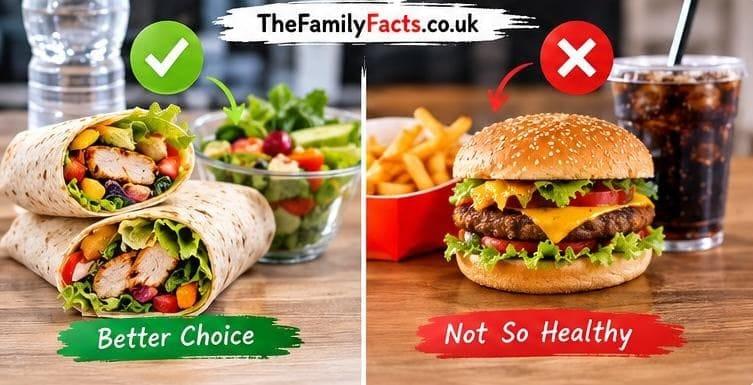
For example, instead of automatically choosing a large fried meal with a sugary drink, you might select a grilled protein, vegetables, a smaller side, and water.
Small changes can make ordering easier without requiring a completely different eating routine.
How to Build a Healthier Fast-Food Meal
1. Start With Protein
Protein can make a meal more satisfying and is important for normal growth and body functions.
Depending on the restaurant, options may include:
- Grilled chicken
- Beans or lentils
- Eggs
- Fish
- Turkey
- Plain yogurt
Look at the preparation method as well as the ingredient. A grilled protein and a heavily breaded or fried version may have very different nutritional profiles.
2. Add Vegetables or Fruit
Vegetables and fruit provide vitamins, minerals, fiber, and other beneficial nutrients.
Try adding:
- A side salad
- Tomato and lettuce
- Steamed vegetables
- Fresh fruit
- Beans
- Vegetable-based soups
If a restaurant offers several vegetable toppings, adding a few can make a sandwich, wrap, bowl, or burrito more nutrient-rich.
3. Choose Whole Grains When Available
Whole grains contain more of the naturally occurring components of the grain than refined grains.
Depending on the menu, look for:
- Whole-grain bread
- Whole-wheat wraps
- Oatmeal
- Brown rice
- Whole-grain bowls
Not every restaurant offers these choices, so there is no need to make your meal complicated when they are unavailable.
4. Think About Your Drink
Drinks can contribute significant amounts of added sugar without providing much nutritional value.
Water is a simple choice. Other possibilities can include unsweetened tea or plain milk, depending on the menu.
If you want a sweet drink occasionally, it does not need to become a source of guilt. The bigger picture is your overall eating pattern.
Healthy Fast Food Choices by Meal
Breakfast
Fast-food breakfast can sometimes be improved by choosing combinations that include protein and fruit or whole grains.
Possible choices include:
- Egg and vegetable breakfast sandwiches
- Oatmeal with fruit
- Eggs with whole-grain toast
- Plain yogurt with fruit
- Breakfast wraps with vegetables
Be mindful of oversized breakfast combinations containing several processed meats, fried sides, and sugary beverages.
Lunch
For lunch, consider meals such as:
- Grilled chicken salads
- Bean and vegetable bowls
- Grilled chicken wraps
- Vegetable soups with a sandwich
- Rice bowls with vegetables and a protein source
Sauces and dressings can substantially change the nutritional profile of a meal, so checking the menu information can be useful.
Dinner
A balanced fast-food dinner might include:
- A protein source
- A vegetable or fruit
- A grain or other carbohydrate source
- Water or an unsweetened beverage
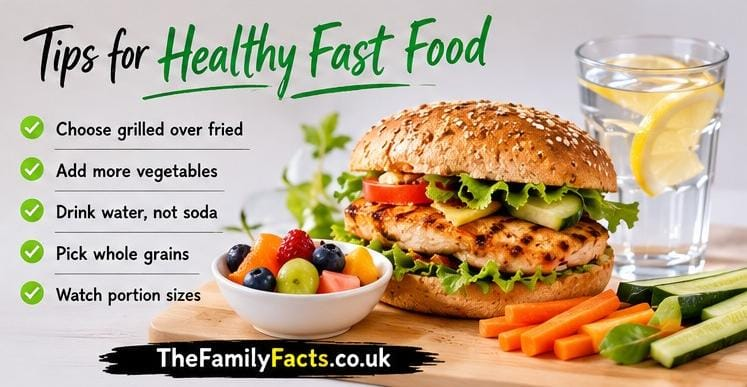
For example, a grilled chicken sandwich with vegetables and fruit can be a practical option when available.
Healthy Fast Food: What Should You Look For?
Nutrition information can help you compare menu choices without relying on advertising terms such as “light,” “fresh,” or “healthy.”
| What to Check | Why It Matters |
|---|---|
| Protein | Helps build a more balanced meal |
| Fiber | Supports normal digestive health |
| Vegetables and fruit | Provide important nutrients |
| Added sugar | Useful to monitor, especially in drinks |
| Sodium | Many restaurant foods can be high in sodium |
| Saturated fat | Worth considering as part of overall dietary patterns |
| Portion size | Larger portions can contain more calories and nutrients |
No single number tells you whether an entire meal is healthy. Consider the meal as a whole.
Common Healthy Fast-Food Mistakes
Mistake 1: Assuming a Salad Is Automatically Healthier
A salad can be a nutritious choice, but toppings and dressings matter.
A salad covered with fried toppings, cheese, creamy dressing, and a large portion of another high-calorie ingredient may not be substantially lighter than another menu item.
Better approach: Look at the ingredients rather than the word “salad.”
Mistake 2: Ignoring Drinks
A meal may seem reasonable until a large sweetened beverage is added.
Better approach: Make water or an unsweetened drink your default when possible.
Mistake 3: Choosing the Largest Size Because It Seems Like Better Value
A larger portion is not necessarily a better nutritional choice.
Better approach: Choose a portion that suits your hunger and avoid automatically upgrading every item.
Mistake 4: Following “Healthy” Marketing Without Checking Ingredients
Words such as “natural,” “fresh,” or “fit” do not provide enough information by themselves.
Better approach: Read the actual nutrition information and ingredient details when available.
How to Order Healthy Fast Food on a Budget
Eating more thoughtfully does not always require buying premium menu items.
Try these practical strategies:
- Choose basic meals instead of expensive specialty combinations.
- Compare prices before adding extras.
- Choose water instead of purchasing a sweetened drink.
- Look for beans, vegetables, eggs, or other affordable protein options.
- Skip unnecessary add-ons if you do not actually want them.
- Use available nutrition information to compare similar meals.
The most practical choice is usually one that fits both your nutritional needs and your budget.
Is Fast Food Always Unhealthy?
No. The nutritional quality of fast food varies considerably between restaurants, menu items, portion sizes, and preparation methods.
Eating fast food occasionally does not automatically make an overall diet unhealthy. What matters more is the pattern of foods eaten over time.
It is also unnecessary to think of meals in terms of perfection. A balanced approach leaves room for different foods while encouraging variety and adequate nutrition.
How to Make Better Choices When Options Are Limited
Sometimes the menu simply does not contain an ideal meal. You can still make the best choice available.
For example:
- Choose a smaller portion if large options are the only choices.
- Add vegetables when possible.
- Pick water instead of a sugary drink.
- Choose grilled rather than fried when both are available.
- Look for fruit as a side.
- Avoid adding multiple rich sauces if you do not need them.
Healthy eating does not require perfect choices every time.
A Simple Healthy Fast-Food Decision Guide
When you are standing at the counter or ordering online, ask yourself:
1. Where is my protein?
Look for chicken, beans, eggs, fish, yogurt, or another suitable option.
2. Can I add a vegetable or fruit?
Choose one if it is available and appealing.
3. What am I drinking?
Water or an unsweetened option is usually a straightforward choice.
4. Do I need the largest portion?
Choose based on hunger rather than size upgrades.
5. Can I check the nutrition information?
If available, use it to compare similar choices.
These five questions can turn a rushed restaurant visit into a more informed decision.
FAQ About Healthy Fast Food
What is the healthiest fast food?
There is no single healthiest fast-food meal for everyone. A balanced choice often includes a protein source, vegetables or fruit, an appropriate portion, and a low- or no-sugar beverage.
Can fast food be part of a healthy diet?
Yes. Fast food can occasionally fit into an overall balanced eating pattern. Variety, moderation, and the nutritional quality of foods eaten across the day and week are more important than judging one meal in isolation.
Is a salad always a healthy fast-food choice?
Not necessarily. Salads can contain fried toppings, rich dressings, cheese, and other ingredients that change their nutritional content. Check the ingredients and portion size.
What should I drink with healthy fast food?
Water is a simple option. Unsweetened tea or other drinks without added sugar may also work depending on the restaurant and your preferences.
How can I eat healthy fast food on a budget?
Compare menu prices, choose simple meals, avoid unnecessary extras, and consider affordable ingredients such as beans, eggs, vegetables, or basic grilled proteins when available.
Is grilled food healthier than fried food?
Grilling can reduce the amount of added fat compared with some fried preparations, but the complete meal still matters. Sauces, portions, toppings, and sides can all affect the nutritional profile.
What should I look for on a fast-food nutrition label?
Consider serving size, protein, fiber, sodium, added sugars, and saturated fat. Use the information to compare similar menu options rather than focusing on one number alone.
Conclusion
Healthy fast food is less about finding a perfect restaurant meal and more about making practical choices. When eating on the go, look for a balance of protein, vegetables or fruit, whole grains when available, and a sensible portion. Water or an unsweetened beverage can also be an easy improvement.
Most importantly, avoid an all-or-nothing mindset. One meal does not determine the quality of your overall diet. With a little planning and attention to the menu, fast food can be a convenient part of a balanced eating pattern.