


Eating well does not mean following a strict diet, eliminating your favorite foods, or spending hours preparing complicated meals. At its core, eating well means giving your body a variety of nutritious foods while building eating habits that are realistic enough to maintain.
For many people, the hardest part is knowing where to start. Should you eat more protein? Are carbohydrates healthy? How much fruit and vegetables do you need? What makes a meal balanced?
This guide explains the basics of eating well in simple, practical terms. You will learn how to build balanced meals, choose nutritious foods, avoid common mistakes, and make healthier choices without turning food into a source of unnecessary stress.
What Does Eating Well Mean?
Eating well means choosing a varied pattern of foods that provides the nutrients your body needs. A balanced eating pattern generally includes vegetables, fruits, whole grains or other carbohydrate-rich foods, protein sources, and appropriate amounts of fats.
Rather than judging individual foods as simply “good” or “bad,” it is more useful to consider your overall eating pattern.
For example, a meal containing rice, vegetables, beans, and a source of healthy fat can be part of a balanced diet. Another meal might include whole-grain bread, eggs, fruit, and yogurt.
The goal is variety, balance, and consistency.
Why Is Eating Well Important?
Food provides energy and essential nutrients that support normal body functions. A varied diet can help you obtain nutrients such as protein, fiber, vitamins, minerals, and essential fatty acids.
Eating well can also make everyday meal planning easier because you have a basic framework to follow.
Instead of asking:
“Is this one food healthy?”
Try asking:
“How does this meal fit into my overall eating pattern?”
That change in perspective can make nutrition much easier to understand.
How to Build a Balanced Meal
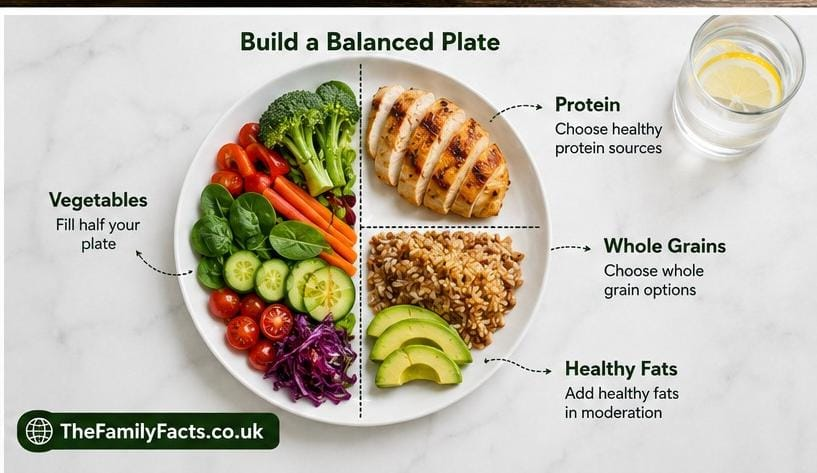
A simple way to plan meals is to combine several food groups.
| Meal component | Examples |
|---|---|
| Vegetables | Spinach, carrots, broccoli, peppers |
| Fruit | Apples, oranges, berries, bananas |
| Protein | Eggs, beans, lentils, fish, poultry, tofu |
| Grains or other carbohydrates | Oats, brown rice, potatoes, whole-grain bread |
| Healthy fats | Nuts, seeds, avocado, olive oil |
You do not need every category at every meal. The idea is to create variety across your day.
Start With Vegetables and Fruit
Vegetables and fruit provide important vitamins, minerals, fiber, and other naturally occurring compounds.
Try adding them to foods you already enjoy:
- Add berries or a banana to oatmeal.
- Put sliced vegetables into a sandwich.
- Add spinach, peppers, or mushrooms to eggs.
- Keep fruit available for an easy snack.
- Add a side salad or cooked vegetables to lunch or dinner.
Small additions can make meals more varied without requiring a complete change in your routine.
Include Protein-Rich Foods
Protein contributes to the growth and maintenance of body tissues and is found in many different foods.
Options include:
- Eggs
- Fish
- Chicken and other poultry
- Beans
- Lentils
- Peas
- Tofu
- Yogurt
- Nuts and seeds
You can rotate different protein sources throughout the week rather than relying on the same food every day.
Choose Nutritious Carbohydrate Sources
Carbohydrates are an important source of energy. Foods such as oats, potatoes, rice, fruit, beans, and whole grains can all contribute carbohydrates to a balanced eating pattern.
Whole grains can also provide fiber and other nutrients.
Examples include:
- Oatmeal
- Whole-grain bread
- Brown rice
- Barley
- Whole-wheat pasta
- Quinoa
The best choice depends on your preferences, culture, budget, and overall dietary pattern.
What Does a Healthy Breakfast Look Like?
A nutritious breakfast does not have to be elaborate.
Consider combinations such as:
- Oatmeal with fruit and nuts.
- Eggs with whole-grain toast and vegetables.
- Plain yogurt with fruit and oats.
- Whole-grain toast with nut butter and a piece of fruit.
If you are not hungry early in the morning, you do not necessarily need to force yourself to eat a large breakfast. Your overall eating pattern matters more than making one particular meal perfect.
Eating Well on a Busy Schedule
A busy schedule can make nutritious choices feel difficult. Planning a few basic foods in advance can help.
Keep Simple Foods Available
Consider keeping convenient ingredients such as:
- Frozen vegetables
- Canned beans
- Eggs
- Oats
- Whole-grain bread
- Fresh or frozen fruit
- Plain yogurt
- Nuts and seeds
These foods can be combined into quick meals with little preparation.
Prepare Ingredients, Not Just Complete Meals
You do not always need to cook several complete meals in advance.
Instead, you can prepare individual ingredients. For example, cooking a batch of rice and preparing vegetables can make several different meals easier to assemble later.
This approach gives you flexibility while reducing daily preparation.
Eating Well on a Budget
Nutritious eating does not have to mean buying expensive specialty foods.
Budget-friendly options can include:
- Beans and lentils
- Oats
- Potatoes
- Seasonal vegetables
- Frozen vegetables
- Eggs
- Canned fish
- Whole grains
Compare prices, buy foods you know you will actually use, and plan meals around ingredients that are already available.
Reducing food waste is another practical way to make your grocery budget go further.
How Often Can You Eat Your Favorite Foods?
Eating well does not require completely avoiding foods such as desserts, snacks, or restaurant meals.
A sustainable approach is to focus on your overall eating pattern rather than trying to make every meal nutritionally perfect.
For example, you might enjoy pizza with vegetables and a salad, or have dessert after dinner. What matters is how those choices fit into the broader pattern of what you eat.
Food is also connected to culture, family, celebrations, and enjoyment. A healthy approach should leave room for those parts of eating.
Common Eating Mistakes to Avoid
Mistake 1: Trying to Change Everything at Once
Making ten major changes simultaneously can become overwhelming.
Better approach: Choose one or two manageable habits first, such as adding fruit to breakfast or including vegetables with dinner.
Mistake 2: Labeling Foods as Completely “Good” or “Bad”
Nutrition is more complicated than a simple good-versus-bad list.
Better approach: Think about frequency, portion, variety, and the overall meal.
Mistake 3: Ignoring Your Personal Needs
There is no single meal plan that works perfectly for everyone.
Age, activity level, dietary preferences, allergies, cultural foods, budget, and health needs can all affect appropriate choices.
Better approach: Use general nutrition principles as a starting point and seek advice from a qualified healthcare professional when you have specific dietary or medical needs.
Mistake 4: Focusing Only on Individual Nutrients
It is easy to become obsessed with protein, carbohydrates, fat, or one particular vitamin.
Better approach: Look at the whole diet. Variety helps you obtain different nutrients from different foods.
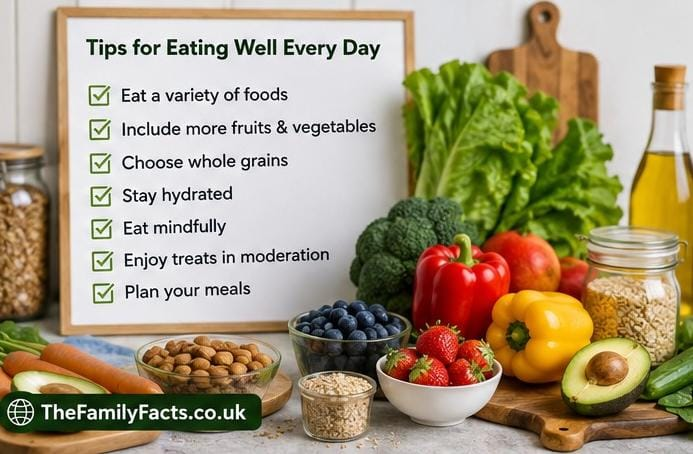
Simple Habits That Can Support Eating Well
If you want to improve your eating habits, start with practical changes.
- Add a vegetable to one meal each day.
- Keep fruit easy to reach.
- Choose whole grains when they fit your preferences.
- Include different protein sources.
- Drink water regularly.
- Plan a few meals before grocery shopping.
- Keep convenient nutritious foods at home.
- Eat slowly enough to notice your hunger and fullness.
- Enjoy favorite foods without unnecessary guilt.
- Focus on consistency rather than perfection.
A Simple One-Day Eating Well Example
Here is an example of how variety can look across a day:
Breakfast: Oatmeal topped with fruit and nuts.
Lunch: Whole-grain sandwich with a protein source and vegetables, plus fruit.
Snack: Yogurt and berries.
Dinner: Rice or another grain with beans or fish and a selection of cooked vegetables.
This is only an example, not a required meal plan. Different people have different nutritional needs and food preferences.
Eating Well and Food Language: Common Grammar Questions
Because “eating well” is also a common English phrase, it is useful to understand why the wording is correct.
Is “Eating Well” Correct Grammar?
Yes. “Eating well” is grammatically correct.
Here, eating is the -ing form of the verb eat, and well is an adverb describing how someone eats.
Correct:
- “I am eating well.”
- “Eating well can be part of a balanced lifestyle.”
- “She wants to start eating well.”
Eating Well vs. Eating Good
In standard English, “eating well” is generally the correct expression when you mean eating in a healthy or satisfactory way.
Less appropriate in standard usage:
- “I am eating good.”
Better:
- “I am eating well.”
The reason is that well functions as an adverb describing the verb eating.
However, “good” can correctly describe a noun:
- “That is a good meal.”
- “She prepared a good breakfast.”
Eating Well vs. Healthy Eating
Both expressions are natural, but they work differently in sentences.
Eating well often describes an action or habit:
- “I am trying to eat well.”
Healthy eating is a noun phrase referring to the general practice:
- “Healthy eating can involve a variety of foods.”
Understanding this difference can make your writing more precise.
Frequently Asked Questions
What is the simplest definition of eating well?
Eating well means following a varied and balanced eating pattern that provides the nutrients your body needs while allowing flexibility and enjoyment.
What foods should you eat when eating well?
A balanced eating pattern can include vegetables, fruits, whole grains, protein-rich foods, and sources of unsaturated fats, along with other foods that fit your individual needs and preferences.
Can you eat snacks and still eat well?
Yes. Snacks can be part of an overall balanced eating pattern. Nutritious options such as fruit, yogurt, nuts, or vegetables can provide useful nutrients, while favorite snack foods can also be enjoyed in moderation.
Is eating well expensive?
Not necessarily. Foods such as oats, beans, lentils, potatoes, eggs, seasonal produce, and frozen vegetables can be affordable choices.
How can I start eating well?
Start with one or two realistic changes. For example, add vegetables to dinner, choose fruit as a snack, or plan meals before shopping.
Is “eating well” grammatically correct?
Yes. “Eating well” is correct because well is an adverb modifying the verb eating.
Is “eating good” correct?
When describing how someone eats, “eating well” is the standard choice in formal English. “Good” is normally an adjective, while “well” functions as the adverb in this expression.
Do I need a strict diet to eat well?
No. Eating well is better understood as an overall pattern rather than a rigid set of rules. Individual nutritional needs vary, so specific dietary concerns should be discussed with a qualified healthcare professional.
Conclusion
Eating well is less about perfection and more about building a varied, balanced, and sustainable approach to food. Include a range of vegetables, fruits, grains, protein sources, and healthy fats, while leaving room for flexibility and enjoyment.
You do not have to transform your entire diet overnight. Start with one practical improvement, repeat it until it becomes comfortable, and gradually build from there. The most useful eating habits are the ones you can realistically maintain over time.